Navigating Subscription Service Changes: What New Terms and Conditions Mean for US Consumers by Mid-2026
The digital landscape is in constant flux, and with it, the way we interact with our favorite subscription services. From streaming platforms to software subscriptions, news outlets to fitness apps, these services have become an integral part of our daily lives. However, a significant wave of changes is on the horizon, particularly for US consumers, with many new terms and conditions expected to be implemented by mid-2026. Understanding these subscription terms changes is not just about staying informed; it’s about protecting your consumer rights, managing your finances, and ensuring you continue to get value from the services you pay for.
This comprehensive guide aims to demystify the upcoming shifts, providing you with a roadmap to navigate the evolving world of subscription services. We’ll delve into the reasons behind these changes, the potential impacts on your finances and privacy, and, most importantly, equip you with actionable strategies to remain in control. By mid-2026, being prepared will be key to avoiding unpleasant surprises and making informed decisions about your digital subscriptions.
The Evolving Regulatory Landscape Driving Subscription Terms Changes
The impetus behind these widespread subscription terms changes is multifaceted, stemming from a combination of consumer protection advocacy, technological advancements, and a renewed focus on data privacy. Government bodies and consumer watchdogs have increasingly scrutinized the practices of subscription-based businesses, aiming to create a more transparent and fair environment for users.
Consumer Protection Laws and Their Impact
Several key legislative initiatives, both at the federal and state levels, are influencing how companies structure their terms and conditions. For instance, the growing concern over ‘dark patterns’ – manipulative design choices that trick users into signing up or making unintended purchases – has led to calls for stricter regulations. States like California have been at the forefront with laws like the California Consumer Privacy Act (CCPA), which grants consumers more control over their personal data. While not directly about subscriptions, its principles often extend to how companies handle user information within their service agreements.
Furthermore, there’s a push for greater transparency regarding automatic renewals and cancellation processes. Many consumers report difficulty canceling subscriptions or being unaware of upcoming renewal charges. New regulations are likely to mandate clearer disclosure of renewal terms, easier cancellation methods, and perhaps even proactive reminders before a subscription renews.
Technological Advancements and Data Privacy
As technology advances, so do the ways companies collect, use, and share user data. This has led to a heightened focus on data privacy within subscription agreements. Companies are being compelled to update their terms to reflect these practices more accurately and to comply with evolving data protection standards. This could mean more detailed explanations of data usage, clearer opt-out options, and potentially stricter limitations on how data is shared with third parties. The goal is to empower consumers with more control over their digital footprint, even within the context of paid services.
Key Areas of Expected Subscription Terms Changes by Mid-2026
While the specifics will vary by service and industry, several common themes are likely to emerge across various subscription platforms. Being aware of these areas will help you identify significant subscription terms changes more quickly when they arrive in your inbox.
1. Pricing Structures and Billing Cycles
One of the most immediate and impactful changes consumers might experience relates to pricing. Companies may adjust their subscription fees, introduce new tiers, or alter billing cycles. This could be due to increased operational costs, expanded content libraries, or a strategic shift in their business model. Expect clearer communication regarding price increases and potential options for existing subscribers, such as grandfathering clauses or opportunities to switch to new plans.
Furthermore, the way services handle promotional pricing and introductory offers is also under scrutiny. Regulations might require companies to make the transition from promotional rates to standard rates more transparent, ensuring consumers are fully aware of the price hike before it occurs.
2. Automatic Renewals and Cancellation Policies
This is a major pain point for many consumers, and thus, a prime target for regulatory reform. By mid-2026, expect to see significant enhancements in:
- Clearer Disclosure: Companies will likely be required to provide more prominent and unambiguous disclosure of automatic renewal terms at the point of sale and in subsequent communications.
- Easier Cancellation: The infamous ‘cancel button’ saga may finally be resolved. Regulations could mandate that cancellation processes be as straightforward as signing up, eliminating unnecessary hurdles or confusing interfaces.
- Pre-Renewal Notifications: Many services already send reminders before an annual subscription renews, but this could become a mandatory practice for all auto-renewing subscriptions, regardless of their billing cycle. These notifications would clearly state the upcoming charge and provide instructions for cancellation.
3. Data Privacy and Usage Policies
As mentioned, data privacy is a hot topic. New terms will likely feature:
- Simplified Language: An effort to make privacy policies more understandable, moving away from overly complex legal jargon.
- Enhanced Control: More granular options for users to manage their data preferences, including what data is collected, how it’s used, and whether it’s shared with third parties for marketing or other purposes.
- Transparency on AI/Algorithm Use: With the rise of AI, terms might start addressing how user data contributes to or is influenced by artificial intelligence algorithms within the service, especially concerning content recommendations or personalized experiences.
4. Content Rights and Licensing
For services involving digital content (streaming, e-books, music), changes might occur regarding content rights. This could involve:
- Geographical Restrictions: Clarification or changes in where content can be accessed, especially for international travelers.
- Content Availability: More explicit terms about how content libraries can change, and what happens if specific titles or artists are removed from a platform.
- User-Generated Content: If the service allows user-generated content, there might be updates to how that content is licensed, stored, and potentially monetized by the platform.
5. Service Level Agreements (SLAs) and Uptime Guarantees
While often more relevant for business-to-business subscriptions, consumer services might also see updates to their SLAs. This could include clearer definitions of service availability, what constitutes an outage, and any compensation or remedies offered during prolonged disruptions. As our reliance on these services grows, so does the expectation for reliability.
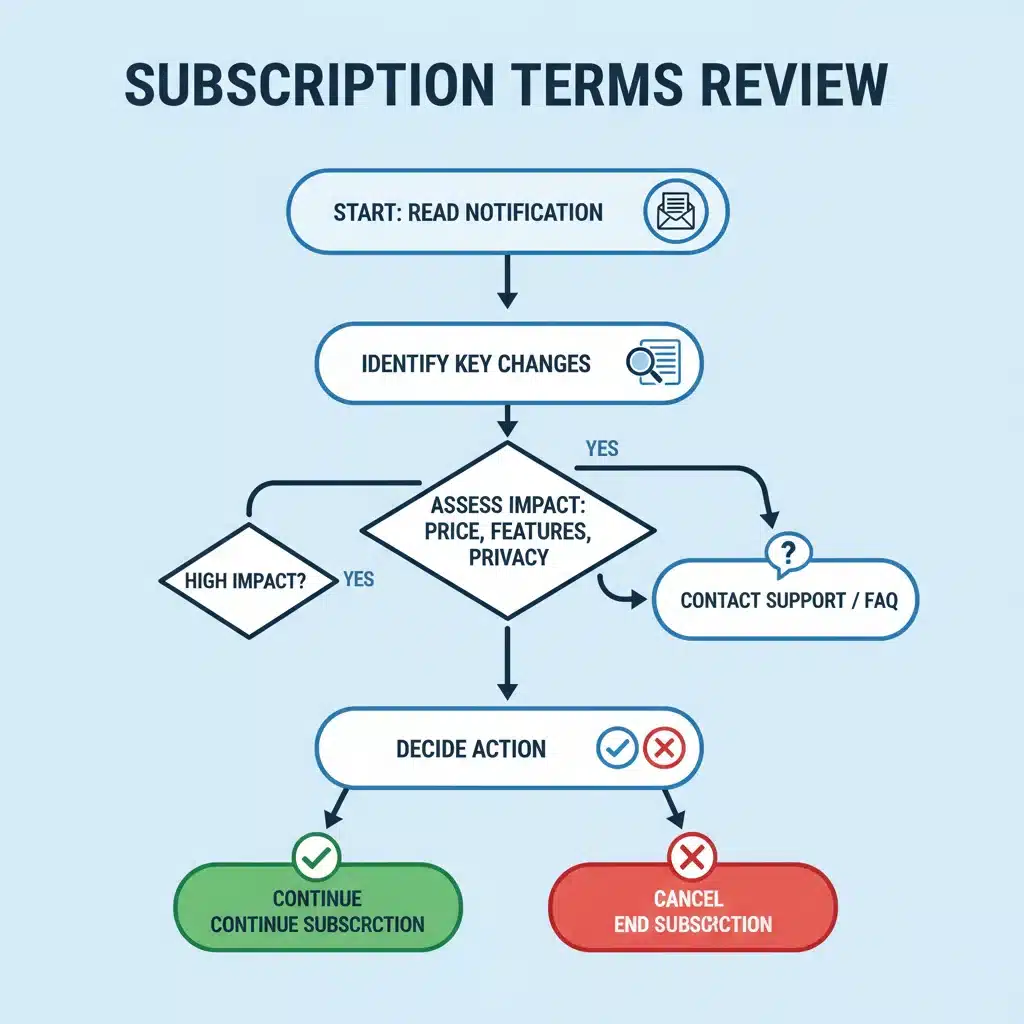
How to Prepare for and Navigate These Changes
The prospect of sifting through updated terms and conditions for all your subscriptions might seem daunting. However, a proactive approach can save you time, money, and frustration. Here’s how you can effectively navigate these upcoming subscription terms changes.
1. Stay Informed and Read Notifications Carefully
This is perhaps the most crucial step. Companies are legally obligated to notify you of significant changes to their terms and conditions. Do not dismiss these emails as spam or irrelevant. When you receive an email titled ‘Important Update to Our Terms of Service’ or ‘Changes to Your Subscription Agreement,’ take the time to open and read it. Look for:
- Effective Date: When do the new terms come into effect?
- Summary of Changes: Many companies provide a summary of key changes at the top or link directly to the modified sections.
- Your Options: What can you do if you don’t agree with the changes (e.g., cancel your subscription)?
2. Audit Your Current Subscriptions
Before the mid-2026 deadline, take stock of all your active subscriptions. Many people are surprised by how many services they’re actually paying for. Use a spreadsheet, a budgeting app, or even a simple pen and paper to list:
- Service Name
- Monthly/Annual Cost
- Renewal Date
- Purpose (Do you still use it? Is it essential?)
This audit will give you a clear picture of your subscription spending and help you identify services you might consider cancelling if the new terms are unfavorable.
3. Understand Your Consumer Rights
Familiarize yourself with basic consumer protection laws in your state and at the federal level. Knowing your rights regarding contract changes, unfair practices, and cancellation policies will empower you to challenge unfavorable terms or seek recourse if a company isn’t complying with regulations. Resources from organizations like the Federal Trade Commission (FTC) or your state’s Attorney General’s office can be invaluable.
4. Prioritize Key Information
When reviewing new terms, don’t feel obligated to memorize every clause. Instead, focus on the sections most relevant to you:
- Pricing and Billing: Are there any increases? New fees? Changes to auto-renewal?
- Cancellation Policy: How easy or difficult is it to cancel? Are there any penalties?
- Data Privacy: How is your data used? Can you opt out of certain data sharing?
- Service Scope: Is anything being added or removed from the service you’re paying for?
5. Leverage Comparison Tools and Alternatives
If a service’s new terms make it less appealing, don’t hesitate to explore alternatives. The market for most subscription services is competitive. Use comparison websites or conduct your own research to find services that offer similar value with terms that better suit your preferences and budget. This competitive pressure often encourages companies to maintain reasonable terms to retain subscribers.
6. Don’t Hesitate to Contact Customer Support
If you have questions about new terms or are unsure how they impact your specific situation, reach out to the service’s customer support. A clear understanding can prevent future misunderstandings. Document your interactions, including dates, names of representatives, and summaries of conversations, especially if you are disputing a charge or attempting to cancel.
Potential Impacts of These Changes on US Consumers
The ripple effects of these subscription terms changes will be felt across various aspects of consumer life. While some changes aim to protect consumers, others might necessitate adjustments in budgeting and digital habits.
Financial Implications
The most immediate impact for many will be financial. Price adjustments, new fees, or less forgiving cancellation policies could lead to increased monthly expenses. Consumers who aren’t diligent in reviewing new terms might find themselves paying more for services they no longer fully utilize or for features they didn’t explicitly want.
On the flip side, clearer auto-renewal notifications and easier cancellation processes could empower consumers to reduce ‘subscription bloat’ – the accumulation of forgotten or unused subscriptions – leading to overall savings. Budgeting apps and financial management tools will become even more critical in tracking and managing these recurring expenses.
Privacy and Data Security Concerns
While the goal of many new data privacy terms is to enhance consumer control, the reality can be more complex. Consumers will need to actively engage with privacy settings and carefully read how their data is being used. A failure to do so might inadvertently grant companies broader permissions than intended, potentially leading to more targeted advertising or data sharing. The onus will increasingly be on the individual to manage their digital privacy proactively.
Changes in User Experience and Service Quality
Companies might use these term updates as an opportunity to adjust their service offerings. This could mean both positive and negative changes. For example, a price increase might come with enhanced features or a larger content library. Conversely, to cut costs, some services might reduce certain features, introduce more ads, or alter their content delivery, which could impact the overall user experience. It’s essential to evaluate if the revised service still meets your expectations and needs.
Increased Consumer Empowerment and Awareness
Despite the potential challenges, the overall trend towards greater transparency and easier cancellation is a win for consumers. These changes are designed to foster a more informed and empowered user base. As consumers become more accustomed to scrutinizing terms and conditions, they will be better equipped to make conscious choices about their digital spending and data privacy, ultimately leading to a healthier subscription ecosystem.

Long-Term Outlook: A More Transparent Subscription Economy
The period leading up to mid-2026 marks a significant inflection point for the subscription economy in the US. The anticipated subscription terms changes are not merely administrative updates; they represent a fundamental shift towards greater accountability and transparency from service providers. This evolution is driven by a combination of consumer demand, regulatory pressure, and a growing understanding of the digital rights that individuals possess.
The Role of Consumer Advocacy
Consumer advocacy groups will continue to play a pivotal role in shaping these policies. By highlighting unfair practices and championing user rights, they ensure that the voice of the consumer is heard in legislative debates and corporate decision-making processes. Their ongoing efforts will likely lead to further refinements in how subscription services operate, pushing for even greater clarity and fairness beyond 2026.
Technological Solutions for Management
Expect to see a rise in technological solutions designed to help consumers manage their subscriptions. This could include advanced budgeting apps with AI-driven alerts for upcoming renewals, services that help you easily cancel unwanted subscriptions, or platforms that provide simplified summaries of complex terms and conditions. These tools will become indispensable for individuals navigating a landscape populated by numerous digital commitments.
Shifting Business Models
In response to increased scrutiny and consumer expectations, businesses themselves may adapt their models. This could manifest as more flexible subscription options, clearer communication strategies, or a greater emphasis on building trust through transparent practices. Companies that embrace these changes proactively are likely to foster stronger customer loyalty and a more positive brand image in the long run.
Conclusion: Empowering Yourself in the Subscription Era
The upcoming subscription terms changes by mid-2026 are a testament to the dynamic nature of the digital world. While they may require a bit more attention and proactive management from your side, they ultimately serve to create a more equitable and transparent environment for US consumers. By staying informed, auditing your subscriptions, understanding your rights, and diligently reviewing new terms, you can ensure that you remain in control of your digital life and your finances.
Don’t let the fine print intimidate you. Instead, view these changes as an opportunity to re-evaluate your digital consumption, optimize your spending, and reinforce your privacy settings. The empowered consumer is an informed consumer, and by mid-2026, being well-versed in your subscription agreements will be a valuable skill in the modern digital age. Take the time now to prepare, and you’ll be well-positioned to navigate the evolving subscription economy with confidence.