Mastering Mattress Selection 2026: The Ultimate Buyer’s Guide to Restful Sleep
Mastering Mattress Selection 2026: The Ultimate Buyer’s Guide to Restful Sleep
Are you tossing and turning, waking up feeling more tired than when you went to bed? The culprit might be hiding right under your sheets: your mattress. In 2026, the world of sleep technology has advanced significantly, offering more choices and innovations than ever before. Choosing the right mattress isn’t just about comfort; it’s about investing in your health, well-being, and overall quality of life. A truly restorative night’s sleep can improve your mood, boost your productivity, and even strengthen your immune system. This comprehensive mattress selection guide is designed to cut through the noise, providing you with expert insights into materials, firmness, and cutting-edge sleep technology to help you make an informed decision and achieve the restful sleep you deserve.
The Pivotal Role of a Quality Mattress in Your Life
Before diving into the specifics of mattress types and features, let’s underscore why your mattress choice is so critical. Sleep is not merely a period of inactivity; it’s a vital physiological process during which your body repairs itself, consolidates memories, and regulates hormones. A poor mattress can disrupt this delicate balance, leading to a myriad of issues:
- Chronic Pain: An unsupportive mattress can exacerbate back, neck, and joint pain, leading to stiffness and discomfort throughout the day.
- Sleep Deprivation: Frequent awakenings, difficulty falling asleep, and restless nights are often directly linked to an uncomfortable sleeping surface.
- Reduced Cognitive Function: Lack of quality sleep impairs concentration, problem-solving abilities, and decision-making.
- Impact on Mood: Sleep deprivation is a known contributor to irritability, stress, and even symptoms of anxiety and depression.
- Overall Health Concerns: Long-term poor sleep has been associated with increased risks of obesity, heart disease, and diabetes.
Given these profound impacts, approaching your mattress selection guide with diligence is not a luxury, but a necessity. The right mattress acts as the foundation for your sleep health, directly influencing your energy levels, physical comfort, and mental clarity.
Understanding Mattress Materials: A Deep Dive into What’s Inside
The core of any mattress lies in its construction materials. Each type offers distinct advantages and disadvantages, influencing support, durability, temperature regulation, and overall feel. Understanding these differences is paramount for effective mattress selection guide navigation.
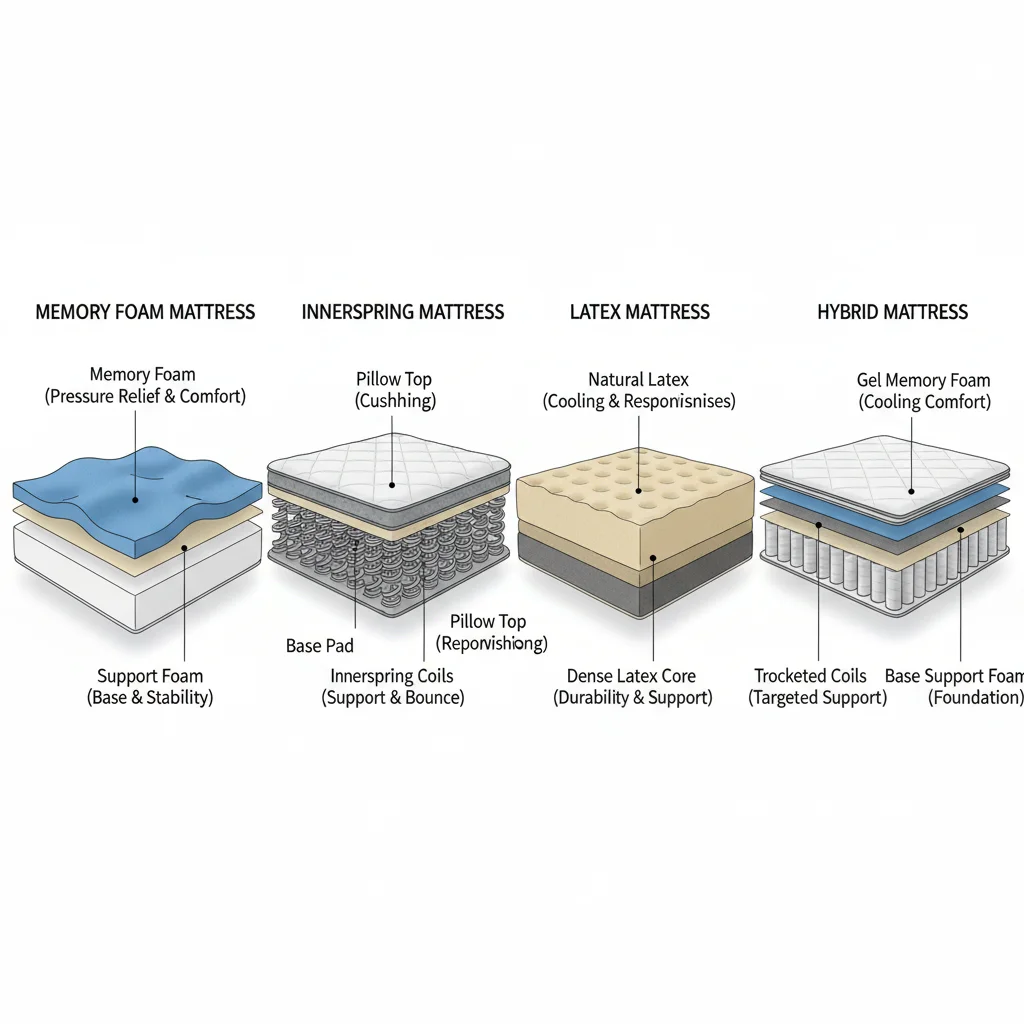
1. Innerspring Mattresses: The Traditional Choice
Innerspring mattresses are perhaps the most traditional and widely recognized type. They rely on a system of steel coils to provide support and bounce. The quality and arrangement of these coils significantly impact the mattress’s performance.
- Bonnell Coils: Hourglass-shaped, these are the oldest and most common coil type, offering firm support.
- Offset Coils: Similar to Bonnell but with hinged coils that conform better to the body.
- Continuous Coils: Made from a single wire, offering excellent durability and stability.
- Pocketed Coils (Individually Wrapped Coils): Each coil is encased in its own fabric pocket, allowing it to move independently. This design excels at minimizing motion transfer and conforming to the body’s contours, making it a popular choice for couples.
Pros:
- Excellent breathability due to air circulation between coils.
- Good edge support (especially with reinforced edges).
- Responsive and bouncy feel, making it easier to move around.
- Generally more affordable than other types.
Cons:
- Can be noisy over time (though modern designs minimize this).
- May not offer as much pressure relief as foam or latex.
- Motion transfer can be an issue with traditional coil systems.
2. Memory Foam Mattresses: The Hugging Sensation
Developed by NASA, memory foam (viscoelastic polyurethane foam) is renowned for its ability to contour closely to the body, distributing weight evenly and relieving pressure points. This ‘hugging’ sensation is a defining characteristic.
- Traditional Memory Foam: Can retain body heat, which might be an issue for hot sleepers.
- Open-Cell Memory Foam: Features a more porous structure to improve airflow and reduce heat retention.
- Gel-Infused Memory Foam: Incorporates gel particles to help dissipate heat and provide a cooler sleep surface.
Pros:
- Exceptional pressure relief and body contouring.
- Excellent motion isolation, ideal for couples.
- Hypoallergenic properties, resisting dust mites and allergens.
- Durable with proper care.
Cons:
- Can sleep hot (though newer technologies address this).
- May have an initial ‘off-gassing’ odor.
- Slower response time, making it harder to change positions.
- Can feel ‘stuck’ for some sleepers.
3. Latex Mattresses: Natural Resilience and Support
Latex mattresses are made from latex foam, which can be natural (derived from rubber trees), synthetic, or a blend. Natural latex is highly durable, resilient, and offers a unique buoyant feel.
- Dunlop Latex: A denser, more durable latex with a firmer feel.
- Talalay Latex: A lighter, airier latex with a softer, more consistent feel, often used in top comfort layers.
Pros:
- Highly durable and long-lasting.
- Excellent pressure relief combined with a buoyant, responsive feel.
- Naturally hypoallergenic, antimicrobial, and resistant to dust mites.
- Good temperature regulation due to open-cell structure.
- Eco-friendly options available (natural latex).
Cons:
- Can be heavier and more expensive than other types.
- Less common in stores, potentially harder to try before buying.
4. Hybrid Mattresses: The Best of Both Worlds
Hybrid mattresses combine the best features of innerspring and foam/latex mattresses. Typically, they feature a support core of pocketed coils topped with comfort layers of memory foam, latex, or other specialized foams.
Pros:
- Balanced feel: combines the support and bounce of coils with the pressure relief of foam.
- Excellent motion isolation due to pocketed coils.
- Good airflow and temperature regulation.
- Versatile, catering to a wide range of sleep preferences.
Cons:
- Can be more expensive due to complex construction.
- Heavier than all-foam mattresses.
Deciphering Firmness Levels: Finding Your Perfect Support
Mattress firmness is a subjective yet crucial factor in your mattress selection guide journey. It refers to how hard or soft the mattress feels. There’s no universal ‘best’ firmness; it depends entirely on your personal preferences, body weight, and primary sleeping position.
Firmness Scale Explained:
Mattress firmness is often rated on a scale of 1 to 10, where 1 is extra soft and 10 is extra firm. Most mattresses fall between 4 and 8.
- Soft (3-4): Ideal for side sleepers and those with lower body weights. Provides deep contouring and pressure relief for shoulders and hips.
- Medium-Soft (5): A good balance for side sleepers who want more support, or back sleepers who prefer a softer feel.
- Medium-Firm (6-7): The most popular choice, suitable for a wide range of sleepers, especially back sleepers and couples with different preferences. Offers a balance of comfort and support.
- Firm (8): Best for stomach sleepers and heavier individuals who need robust support to keep the spine aligned.
- Extra Firm (9-10): Rarely chosen by the general public, often used for specific medical needs or very heavy individuals.
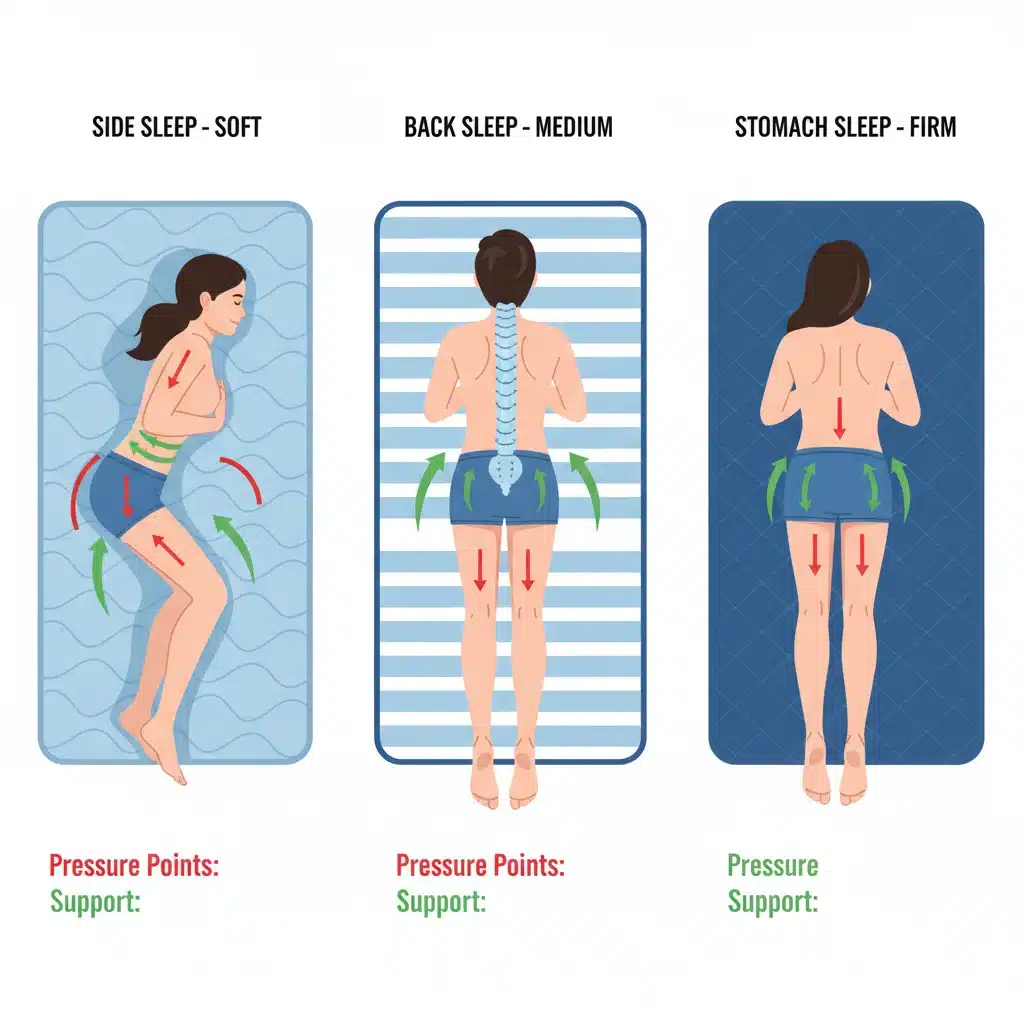
Firmness by Sleeping Position:
- Side Sleepers: Typically need a softer to medium mattress (4-6) to allow shoulders and hips to sink in, maintaining spinal alignment and relieving pressure points.
- Back Sleepers: Generally thrive on a medium to medium-firm mattress (5-7) that supports the natural curve of the spine without creating gaps or excessive sinkage.
- Stomach Sleepers: Require a firmer mattress (7-8) to prevent the hips from sinking too low, which can strain the lower back.
- Combination Sleepers: Often benefit from a medium-firm mattress (6-7) that offers a balance of responsiveness and contouring, allowing for easy movement.
Firmness by Body Weight:
- Lighter Individuals (under 130 lbs): May find firmer mattresses too hard and benefit from softer options to achieve adequate contouring.
- Average Weight Individuals (130-230 lbs): Have the most flexibility, often finding comfort in medium to medium-firm options.
- Heavier Individuals (over 230 lbs): Generally require firmer mattresses with robust support cores (like strong innersprings or dense foams/latex) to prevent excessive sinkage and ensure proper spinal alignment.
Embracing Sleep Technology: Innovations for a Better Tomorrow
The year 2026 brings exciting advancements in sleep technology, moving beyond basic mattress construction to enhance specific aspects of your sleep experience. Incorporating these innovations into your mattress selection guide can lead to significant improvements in sleep quality.
1. Advanced Temperature Regulation: The Cool Sleep Revolution
Many people struggle with sleeping hot. Modern mattresses employ various technologies to combat heat retention:
- Phase Change Materials (PCMs): These materials absorb and release heat to maintain a consistent sleep temperature, actively adapting to your body.
- Gel Infusions: Gel beads or layers within foam help draw heat away from the body.
- Copper Infusions: Copper is a natural thermal conductor and can help dissipate heat, while also offering antimicrobial benefits.
- Open-Cell and Aerated Foams: These foams have a more porous structure, allowing for greater airflow compared to traditional dense foams.
- Smart Fabrics: Mattress covers made with cooling fibers like Tencel, bamboo, or specialized synthetic blends can wick away moisture and enhance breathability.
2. Smart Mattresses: The Future of Personalized Sleep
Smart mattresses are equipped with sensors and technology to monitor and adapt to your sleep patterns.
- Sleep Tracking: Built-in sensors can monitor heart rate, breathing, movement, and sleep cycles, providing personalized insights via an app.
- Adjustable Firmness: Some smart mattresses allow you to adjust firmness zones electronically, catering to different preferences or changing needs (e.g., pregnancy).
- Temperature Control: Advanced systems can actively heat or cool different zones of the bed.
- Snore Detection and Intervention: Certain models can gently adjust the bed’s position to alleviate snoring.
3. Zoned Support Systems: Targeted Relief
Many modern mattresses feature zoned support, meaning different areas of the mattress have varying firmness levels or support structures. This allows for targeted pressure relief and spinal alignment, offering firmer support where needed (e.g., lumbar region) and softer comfort for shoulders and hips.
4. Edge Support Enhancement: Maximizing Usable Surface
Improved edge support, often through reinforced coils or denser foam perimeters, prevents sagging at the edges. This expands the usable sleeping surface and makes it easier to get in and out of bed.
Key Considerations in Your Mattress Selection Guide
Beyond materials, firmness, and technology, several practical factors should influence your final decision.
1. Budget: An Investment in Health
Mattresses range widely in price, from a few hundred to several thousand dollars. While it’s tempting to opt for the cheapest option, remember that a mattress is a long-term investment in your health. Set a realistic budget, but prioritize quality and features that align with your sleep needs. Look for sales, financing options, and extended trial periods.
2. Trial Periods and Warranties: Your Safety Net
Most reputable mattress companies offer a sleep trial, typically 90 to 365 nights. This allows you to test the mattress in your home, which is crucial as it takes time for your body to adjust. Always check the return policy and any associated fees. A good warranty (10+ years) protects against manufacturing defects and speaks to the company’s confidence in their product.
3. Size and Dimensions: Fit for Your Space and Needs
Ensure the mattress size (Twin, Full, Queen, King, California King) fits your bedroom and accommodates your sleeping habits, whether you sleep alone, with a partner, or with pets. Consider height and thickness, especially if you have existing bedding or a bed frame.
4. Motion Isolation: Important for Couples
If you share your bed, motion isolation is vital. A mattress with good motion isolation prevents movement on one side of the bed from disturbing the other sleeper. Memory foam, latex, and pocketed coil hybrids generally excel in this area.
5. Edge Support: For Full Surface Utilization
Good edge support means you can sit on the edge of the bed or sleep close to it without feeling like you’re rolling off. This is particularly important for those who use the entire surface of the mattress or have mobility issues.
6. Off-Gassing: What to Expect
Some new mattresses, particularly those made with synthetic foams, may emit a temporary, harmless odor known as ‘off-gassing.’ This usually dissipates within a few days in a well-ventilated room. If you are sensitive to smells, consider natural latex or innerspring options, or look for certified foams (e.g., CertiPUR-US) that have low VOC emissions.
The Importance of a Strong Foundation
Even the best mattress can underperform without the right foundation. Ensure your bed frame and foundation (box spring, slatted base, adjustable base) are compatible with your chosen mattress type. Slatted bases should have slats no more than 2-3 inches apart to provide adequate support and prevent sagging.
When to Replace Your Mattress
Even with the most meticulous mattress selection guide, mattresses don’t last forever. Most mattresses have a lifespan of 7-10 years, though high-quality latex or hybrid models can last longer. Signs it’s time for a replacement include:
- Waking up with aches and pains.
- Visible sagging or indentations.
- Increased noise (for innerspring).
- Allergies or asthma worsening at night.
- You sleep better on other beds (hotels, guest rooms).
Tips for Your Mattress Shopping Experience
- Research Online: Start your mattress selection guide journey online to compare models, read reviews, and understand pricing.
- Visit a Store (If Possible): While online shopping is convenient, lying on different mattresses in person can give you a better feel for firmness and materials. Spend at least 10-15 minutes on each mattress in your preferred sleeping position.
- Dress Comfortably: Wear loose clothing when trying out mattresses to get a realistic feel.
- Don’t Be Shy: Lie down in your normal sleeping position, roll around, and simulate your typical night’s sleep.
- Bring Your Partner: If you share a bed, shop together to ensure both your needs are met, especially regarding motion isolation and firmness.
- Ask Questions: Don’t hesitate to ask sales associates about materials, warranties, trial periods, and delivery.
- Consider Adjustable Bases: For enhanced comfort, especially if you read in bed, have back pain, or snore, an adjustable base can be a game-changer.
Conclusion: Your Path to Exceptional Sleep in 2026
Choosing the right mattress is a deeply personal decision that impacts every aspect of your life. By leveraging this comprehensive mattress selection guide, you are now equipped with the knowledge to navigate the vast array of options available in 2026. Prioritize your unique needs, understand the nuances of materials and firmness, and embrace the innovative sleep technology designed to enhance your rest.
Remember, a great mattress is not just a piece of furniture; it’s an investment in your health, happiness, and productivity. Take your time, do your research, and trust your body’s signals. With the right choice, you’ll be well on your way to experiencing the transformative power of truly restorative sleep, waking up refreshed, energized, and ready to tackle whatever the day brings. Sweet dreams!