2026 Guide to High-Speed Internet: Plans, Speeds, & Customer Service

The 2026 Guide to High-Speed Internet Providers: Comparing Plans, Speeds (Up to 10 Gigabits), and Customer Service for US Households
In 2026, the demand for robust, reliable, and incredibly fast internet is no longer a luxury but a fundamental necessity for every US household. From remote work and online education to 4K streaming, immersive gaming, and the ever-expanding smart home ecosystem, our digital lives depend on a seamless connection. Navigating the complex landscape of high-speed internet providers can be daunting, with a myriad of plans, technologies, and promises. This comprehensive guide aims to demystify the process, helping you compare plans, understand speeds up to an astonishing 10 Gigabits, and evaluate the critical aspect of customer service to find the perfect internet solution for your home.
The internet industry is in constant evolution, with new technologies emerging and existing ones improving at a rapid pace. What was considered ‘fast’ just a few years ago is now the baseline, and the future promises even more incredible speeds and connectivity options. As we delve into 2026, US households have more choices than ever before, but also more factors to consider. This article will equip you with the knowledge to make an informed decision, ensuring your home is prepared for the digital demands of today and tomorrow.
Understanding the Need for Speed: Why High-Speed Internet Matters in 2026
The average household in 2026 is a hub of digital activity. Consider a typical day: one family member is on a video conference for work, another is attending an online class, a third is streaming a high-definition movie, and smart home devices are constantly communicating with the cloud. Each of these activities demands significant bandwidth. Without adequate high-speed internet providers, you’ll experience buffering, lag, and frustrating interruptions. But what exactly constitutes ‘high-speed’ in 2026?
The Evolution of Internet Speeds
A decade ago, 25 Mbps was considered broadband. Today, the Federal Communications Commission (FCC) defines broadband as 100 Mbps download and 20 Mbps upload. However, for a truly future-proof connection, especially with the rise of virtual reality, augmented reality, and increasingly sophisticated cloud-based applications, most experts recommend at least 300-500 Mbps for multi-user households. For power users, content creators, or those living in smart homes with dozens of connected devices, speeds of 1 Gigabit (1,000 Mbps) or even 10 Gigabits (10,000 Mbps) are becoming increasingly desirable and, in some areas, readily available.
Key Activities Driving Speed Requirements:
- Remote Work & Online Learning: High-definition video calls, large file transfers, and cloud application usage demand stable and high upload/download speeds.
- 4K/8K Streaming: A single 4K stream can use 25 Mbps, and with multiple streams concurrently, this quickly adds up. 8K content, while still emerging, will demand even more.
- Online Gaming: Low latency and high download/upload speeds are crucial for a smooth, competitive gaming experience.
- Smart Home Devices: Dozens of IoT devices, from security cameras to smart appliances, continuously consume bandwidth.
- Cloud Computing & Storage: Backing up large files to the cloud or accessing cloud-based software requires significant upload and download capacity.
Exploring Internet Technologies: What Do High-Speed Internet Providers Offer?
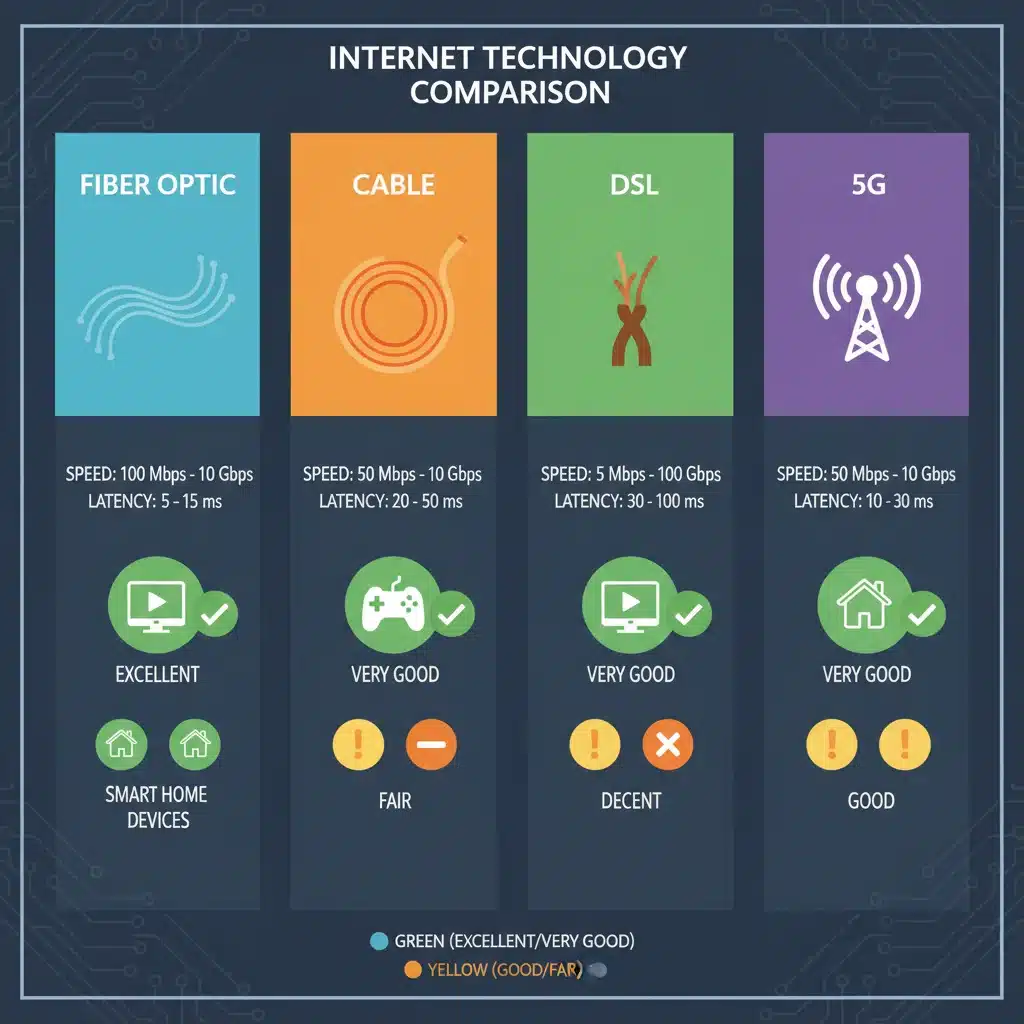
The type of internet technology available in your area significantly impacts the speeds you can achieve and the reliability of your connection. Understanding these technologies is crucial when evaluating high-speed internet providers.
Fiber Optic Internet
Fiber optic internet remains the gold standard for speed and reliability in 2026. It uses thin strands of glass or plastic to transmit data as light signals, offering symmetrical speeds (same upload and download) that can easily reach 1 Gigabit, 2 Gigabits, 5 Gigabits, and even 10 Gigabits in many urban and suburban areas. Fiber is less susceptible to interference and degradation over distance compared to other technologies, making it incredibly stable.
Cable Internet
Cable internet, delivered via coaxial cables, is still widely available and offers impressive speeds, often up to 1-2 Gigabits in many regions. However, cable internet is typically asymmetrical, meaning download speeds are much faster than upload speeds. It’s also a shared network, so speeds can fluctuate during peak usage times in your neighborhood. Despite this, it remains a strong contender for many households.
5G Home Internet
5G home internet has rapidly expanded its footprint, offering a compelling alternative, especially in areas where fiber or high-speed cable might be less accessible. Utilizing cellular 5G networks, it provides wireless broadband directly to your home. Speeds can vary widely depending on signal strength, network congestion, and proximity to a 5G tower, typically ranging from 100 Mbps to 1 Gigabit. Its ease of setup and portability are significant advantages.
DSL (Digital Subscriber Line)
While still present in some rural areas, DSL internet, which uses traditional copper telephone lines, is generally the slowest option among modern broadband technologies. Speeds rarely exceed 100 Mbps and are highly dependent on your distance from the provider’s central office. It’s often considered a last resort for high-speed internet providers in underserved regions.
Satellite Internet
For truly remote locations where other options are unavailable, satellite internet provides a connection. While speeds have improved significantly with newer constellations like Starlink, offering hundreds of Mbps, it still suffers from higher latency compared to ground-based technologies, which can impact real-time applications like online gaming or video conferencing. However, it’s a vital service for those in very isolated areas.
Comparing High-Speed Internet Providers: Key Factors Beyond Speed
While speed is often the primary consideration, it’s far from the only factor when choosing among high-speed internet providers. A truly informed decision requires a holistic view of the entire service package.
1. Available Speeds and Plans (Up to 10 Gigabits)
First, identify what speeds are actually available at your specific address. Providers often advertise ‘up to’ speeds, which may not be what you receive. Look for plans that meet or exceed your household’s current and anticipated needs. For ultra-demanding users, check if 1 Gigabit, 2 Gigabit, 5 Gigabit, or even 10 Gigabit plans are offered by any provider in your vicinity. Remember to consider both download AND upload speeds, especially if you work from home, create content, or frequently upload large files.
2. Pricing and Contracts
- Monthly Cost: Compare the advertised monthly rates, but also look for introductory offers that might expire, leading to a higher price later.
- Contract Length: Many providers offer discounts for signing long-term contracts (12-24 months). Be aware of early termination fees. Month-to-month options offer flexibility but might be more expensive.
- Hidden Fees: Ask about installation fees, equipment rental fees (modem/router), activation fees, and data caps or overage charges. These can significantly impact the total cost of ownership.
- Bundles: Providers often bundle internet with TV, phone, or mobile services. While these can offer savings, ensure you actually need all components of the bundle.
3. Data Caps
Some high-speed internet providers impose data caps, limiting the amount of data you can download or upload each month. Exceeding these caps can result in additional charges or throttled speeds. With increased streaming and cloud usage, ensure any data cap is generous enough for your household, or ideally, choose a provider with unlimited data.
4. Equipment (Modem & Router)
Providers typically offer to rent you a modem and/or router. While convenient, renting can add $10-$15 per month to your bill. Consider purchasing your own compatible equipment, which can save you money in the long run, especially for fiber optic connections where the ONT (Optical Network Terminal) is typically provided by the ISP and you only need to supply the router.
5. Customer Service and Support
This is a critical, often overlooked, factor. When your internet goes down, or you have a billing question, responsive and effective customer service is invaluable. Research customer reviews on sites like the Better Business Bureau, JD Power, and consumer advocacy groups. Look for providers with multiple support channels (phone, chat, email, social media) and reasonable wait times. A provider with excellent speeds but terrible support can lead to immense frustration.
6. Reliability and Uptime
How often does the internet go out? How quickly are outages resolved? While difficult to quantify precisely, online reviews and local forums can offer insights into a provider’s reliability. Fiber optic connections generally boast the highest reliability.
Evaluating Customer Service: A Deeper Dive
In the realm of high-speed internet providers, customer service can be the differentiator between a good experience and a nightmare. Here’s what to look for and how to assess it:
Transparency in Billing and Policies
A good provider is upfront about all costs, terms, and conditions. They don’t hide fees in fine print or surprise you with price hikes after an introductory period without clear communication.
Accessibility of Support
Can you reach a human easily? Are support lines open 24/7, or only during business hours? Do they offer online chat support, which can often be quicker for minor issues?
Technical Expertise
When you do get help, are the representatives knowledgeable and able to resolve your issue efficiently? Nothing is more frustrating than talking to someone who can’t understand or address your technical problem.
Installation and Setup Experience
A smooth installation process, with professional and punctual technicians, sets a positive tone. Conversely, missed appointments or botched installations are immediate red flags.
Online Resources and Self-Help
Does the provider offer a comprehensive knowledge base, FAQs, and troubleshooting guides on their website? The ability to resolve common issues yourself can save you time and hassle.

The Future is Now: 10 Gigabit Internet and Beyond
While 1 Gigabit internet has become increasingly common, 2026 marks a significant push towards multi-gigabit speeds, with 5 Gigabit and even 10 Gigabit plans becoming available in more markets, particularly from fiber optic high-speed internet providers. But who needs 10 Gigabits?
Who Benefits from 10 Gigabit Speeds?
- Heavy Data Users: Researchers, developers, and creative professionals who frequently transfer massive files (terabytes of data).
- Ultimate Smart Homes: Households with dozens of 4K/8K security cameras, complex automation systems, and numerous bandwidth-intensive IoT devices.
- Future-Proofing: Those who want the absolute fastest connection available to ensure they are prepared for any future technological advancements.
- Small Businesses/Home Offices: Running servers, multiple concurrent high-bandwidth applications, or hosting significant online services from home.
It’s important to note that to truly utilize 10 Gigabit speeds, your internal home network (router, Ethernet cables, and device network cards) must also support these speeds. Most standard home equipment is designed for 1 Gigabit, so an upgrade might be necessary.
Tips for Choosing the Best High-Speed Internet Provider
1. Check Availability First
The first step is always to enter your address on various provider websites to see which services are actually available in your specific location. Availability can vary even within the same city block.
2. Assess Your Household Needs
Consider how many people live in your home, how many devices are connected, and what online activities are most common. This will help you determine the minimum speed you need.
3. Read the Fine Print
Don’t be swayed solely by introductory offers. Understand the regular price after the promotional period, contract terms, data caps, and all associated fees.
4. Bundle Wisely
If you need other services like TV or home phone, bundling can save money. However, compare standalone prices to ensure the bundle is truly a deal.
5. Prioritize Customer Service
Look beyond speed and price. A provider with reliable customer service can save you countless headaches in the long run. Check independent reviews and ratings.
6. Consider Future Needs
As technology evolves, your bandwidth needs will likely increase. Opting for a slightly faster plan than you currently need can future-proof your home for a few years.
7. Ask About Promotions and Discounts
Don’t hesitate to ask sales representatives about any unadvertised promotions, loyalty discounts, or special offers for new customers. Sometimes, a simple inquiry can yield significant savings.
8. Understand Upload Speeds
For many years, download speed was the primary focus. However, with increased remote work, video conferencing, and cloud backups, robust upload speeds are just as crucial. Fiber optic high-speed internet providers typically offer symmetrical speeds, which is a major advantage here.
9. Look for No-Contract Options
If you anticipate moving soon or prefer flexibility, seek out providers that offer month-to-month plans without long-term contracts. While these might be slightly more expensive, the freedom can be worth it.
10. Leverage Customer Reviews and Local Forums
While official ratings are helpful, local online forums and neighborhood social media groups can provide invaluable insights into the real-world performance and customer service experiences with high-speed internet providers in your specific area. These can highlight local outages, specific service issues, or particularly good experiences that broader reviews might miss.
Addressing Common Concerns with High-Speed Internet Providers
What if I don’t have fiber available?
If fiber isn’t in your area, cable internet is often the next best option, offering speeds up to 1-2 Gigabits. 5G home internet is also rapidly expanding and can be a strong contender, especially if you have good 5G cellular coverage. Satellite internet remains an option for very rural areas, with Starlink leading the charge in improved speeds and lower latency compared to traditional satellite.
How do I know if I’m getting the advertised speed?
Regularly run speed tests using reliable, independent tools (like Speedtest.net or Fast.com) while connected directly to your modem (bypassing your router and Wi-Fi) if possible. Compare these results with your plan’s advertised speeds. Factors like Wi-Fi interference, older equipment, and network congestion can affect your actual speeds.
Is it worth paying for 10 Gigabit internet?
For most average households in 2026, 1 Gigabit or 2 Gigabit internet is more than sufficient. 10 Gigabit is primarily for power users, large households with extreme demands, or those who want to be completely future-proofed. Ensure your home network infrastructure can support such speeds before investing.
What about net neutrality and internet privacy?
These are ongoing concerns. Research your chosen provider’s stance on net neutrality and their privacy policies. Some providers offer built-in VPN services or enhanced security features as part of their packages.
Conclusion: Connecting Your Home in 2026
Choosing the right high-speed internet providers in 2026 is a critical decision that impacts nearly every aspect of your digital life. By understanding the available technologies, carefully comparing plans, scrutinizing customer service, and looking beyond just the advertised speed, you can secure a connection that is not only fast and reliable but also cost-effective and supported. Whether you need a robust 1 Gigabit connection for your family’s streaming and gaming habits or an ultra-fast 10 Gigabit line for professional data handling, the options are more diverse than ever. Take the time to research, compare, and choose wisely to ensure your US household remains seamlessly connected to the digital world.
The internet landscape will continue to evolve, but with the knowledge gained from this guide, you are well-equipped to make an informed decision today and adapt to the innovations of tomorrow. Happy surfing!