2026 EV Buyer’s Guide: Tax Credits, Charging & Market Trends
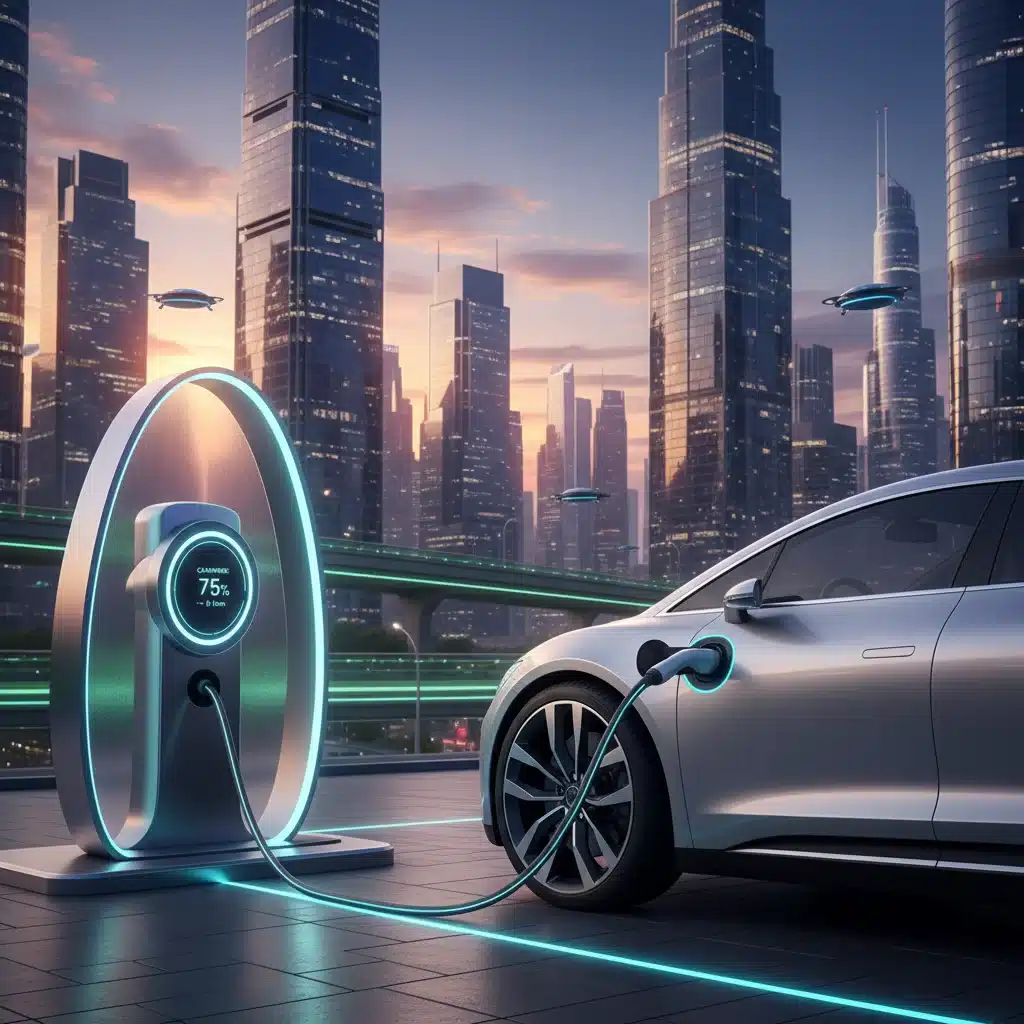
Navigating the 2026 Electric Vehicle Market: A Buyer’s Guide to Federal Tax Credits (Up to $7,500) and Charging Infrastructure Updates in the US
The dawn of 2026 heralds a pivotal moment for the electric vehicle (EV) market. With advancements in battery technology, expanding charging networks, and evolving federal incentives, the landscape for prospective EV owners is more dynamic and promising than ever before. This comprehensive 2026 EV Market Guide is designed to equip you with the knowledge needed to make an informed decision, focusing on the crucial federal tax credits available and the vital developments in charging infrastructure across the United States. Whether you’re a first-time EV buyer or looking to upgrade, understanding these facets is key to unlocking the full potential and savings of electric mobility.
The transition to electric vehicles is not just about environmental consciousness; it’s increasingly about economic savvy and technological advancement. As governments worldwide push for cleaner transportation, incentives and infrastructure are rapidly catching up to consumer demand. In the US, the federal government continues to play a significant role in accelerating this transition through financial incentives, making 2026 an opportune year to consider going electric.
Understanding the Federal EV Tax Credits for 2026: Up to $7,500 Awaits
One of the most compelling reasons to consider an EV in 2026 is the availability of federal tax credits. These incentives, primarily stemming from the Inflation Reduction Act (IRA) of 2022, are designed to make new and used electric vehicles more affordable for consumers. However, the exact amount and eligibility criteria can be complex and are subject to change, making it essential to understand the nuances.
New Clean Vehicle Tax Credit
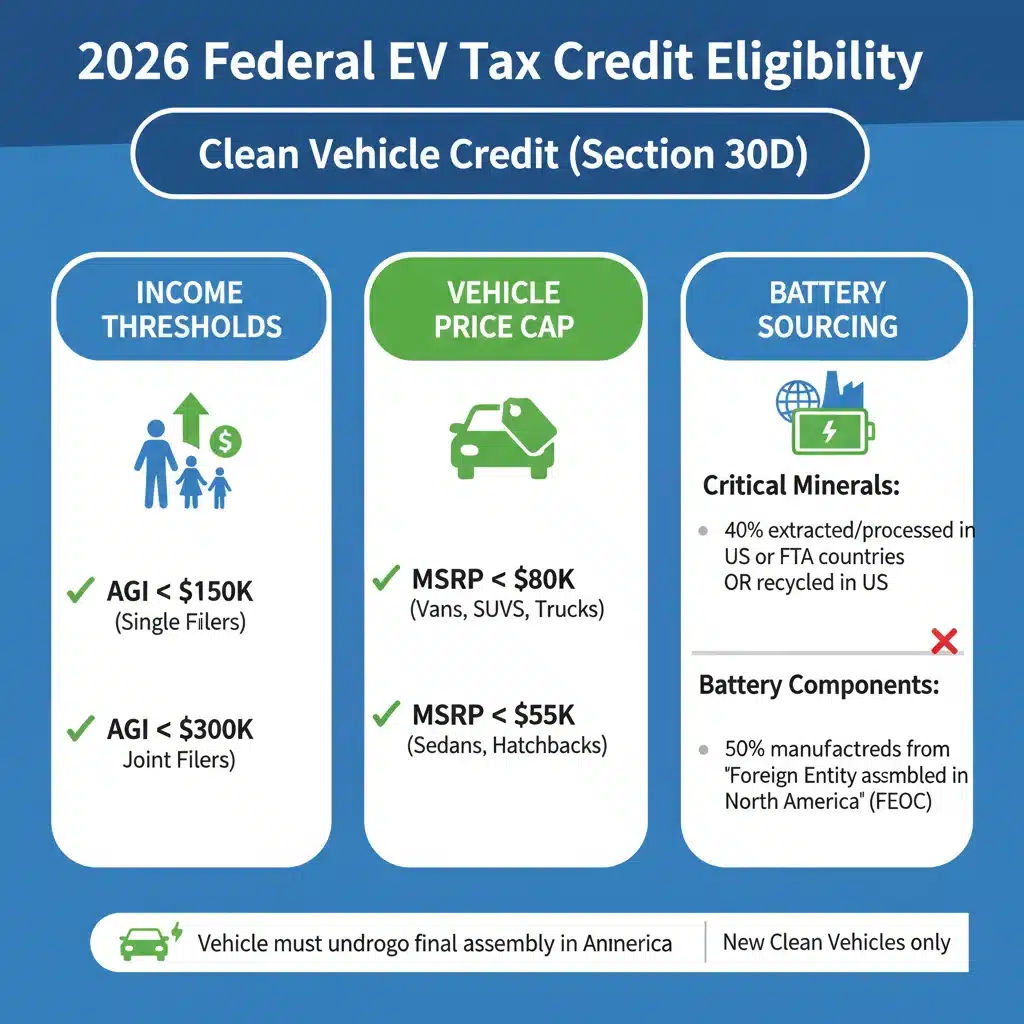
For new clean vehicles purchased in 2026, buyers might be eligible for a tax credit of up to $7,500. This credit is not a straightforward rebate; it’s a non-refundable tax credit, meaning it can reduce your tax liability to $0, but you won’t get a refund for any amount exceeding your tax due. The eligibility for the full $7,500 is split into two main components, each worth $3,750:
- Battery Component Sourcing: The first $3,750 depends on a certain percentage of the EV battery’s critical minerals being extracted or processed in the US or a country with which the US has a free trade agreement, or recycled in North America.
- Battery Manufacturing: The second $3,750 depends on a certain percentage of the battery components being manufactured or assembled in North America.
These percentages are set to increase annually, meaning that as 2026 unfolds, fewer vehicles might qualify for the full credit if manufacturers don’t adapt their supply chains. This makes it crucial for prospective buyers to check the most current list of eligible vehicles on the IRS website or the Department of Energy’s FuelEconomy.gov.
Key Eligibility Requirements for New EVs:
- Vehicle MSRP Limit: The manufacturer’s suggested retail price (MSRP) must not exceed certain limits. For vans, SUVs, and pickup trucks, the limit is typically $80,000. For other vehicles, it’s $55,000. These limits ensure the credits benefit a broader range of consumers rather than luxury buyers.
- Final Assembly in North America: The vehicle must undergo final assembly in North America. This requirement has significantly narrowed the list of eligible vehicles and encourages domestic manufacturing.
- Buyer Income Limitations: There are strict income caps for buyers to qualify for the credit. For married couples filing jointly, the modified adjusted gross income (MAGI) limit is usually $300,000. For heads of households, it’s $225,000, and for all other filers, it’s $150,000. If your income exceeds these thresholds, you will not be eligible for the credit.
- Dealer Registration: As of 2024, the credit can be transferred to the dealer at the point of sale, effectively reducing the purchase price of the vehicle. This is a significant improvement, as it allows buyers to benefit from the credit immediately rather than waiting until tax season. However, the dealer must be registered with the IRS to offer this option.
It’s important to note that these rules are dynamic. The specific percentages for battery components and critical minerals, as well as the list of eligible vehicles, are updated regularly by the Treasury Department and the IRS. Therefore, before making a purchase, always verify the latest information.
Used Clean Vehicle Tax Credit
Beyond new vehicles, 2026 also offers incentives for used EVs, making electric mobility accessible to an even wider audience. A tax credit of up to $4,000, or 30% of the sale price (whichever is less), is available for eligible used clean vehicles. This credit is designed to support the second-hand EV market and further accelerate adoption.
Key Eligibility Requirements for Used EVs:
- Sale Price Limit: The sale price of the used EV must not exceed $25,000.
- Age of Vehicle: The vehicle must be at least two model years older than the calendar year in which you buy it. For a 2026 purchase, this means the vehicle must be a 2024 model year or older.
- Dealer Sale Only: The sale must be made by a dealer, not a private seller. The dealer must be registered with the IRS.
- First Transfer: The credit is only available for the first transfer of the used vehicle to a qualified buyer after August 16, 2022.
- Buyer Income Limitations: Similar to new vehicles, there are income caps for used EV buyers. For married couples filing jointly, the MAGI limit is typically $150,000. For heads of households, it’s $112,500, and for all other filers, it’s $75,000.
The availability of both new and used EV tax credits underscores the government’s commitment to making electric vehicles a mainstream option. These incentives are a significant factor in the overall cost of ownership and can significantly reduce the initial financial outlay for an electric vehicle.
Charging Infrastructure Updates in the US: Powering the EV Revolution
While federal tax credits address the cost of purchasing an EV, the accessibility and reliability of charging infrastructure are equally critical for widespread adoption. The US charging network is undergoing rapid expansion and technological advancement, making range anxiety a diminishing concern for many prospective buyers. The 2026 EV Market Guide would be incomplete without a deep dive into this crucial aspect.
Types of EV Charging
Understanding the different levels of charging is fundamental to planning your EV ownership experience:
- Level 1 Charging: Uses a standard 120V household outlet. It’s the slowest option, typically adding 2-5 miles of range per hour. Ideal for overnight charging at home for drivers with short daily commutes or as a backup.
- Level 2 Charging: Uses a 240V outlet, similar to those for clothes dryers or electric stoves. This is the most common type of home charging and is also prevalent in workplaces and public destinations. It adds 12-80 miles of range per hour, fully charging most EVs overnight or in a few hours.
- DC Fast Charging (DCFC) / Level 3 Charging: The fastest charging option, typically found at public charging stations along highways and major travel corridors. DCFC can add 100-300 miles of range in just 20-60 minutes, making it suitable for long-distance travel.
National Charging Network Expansion
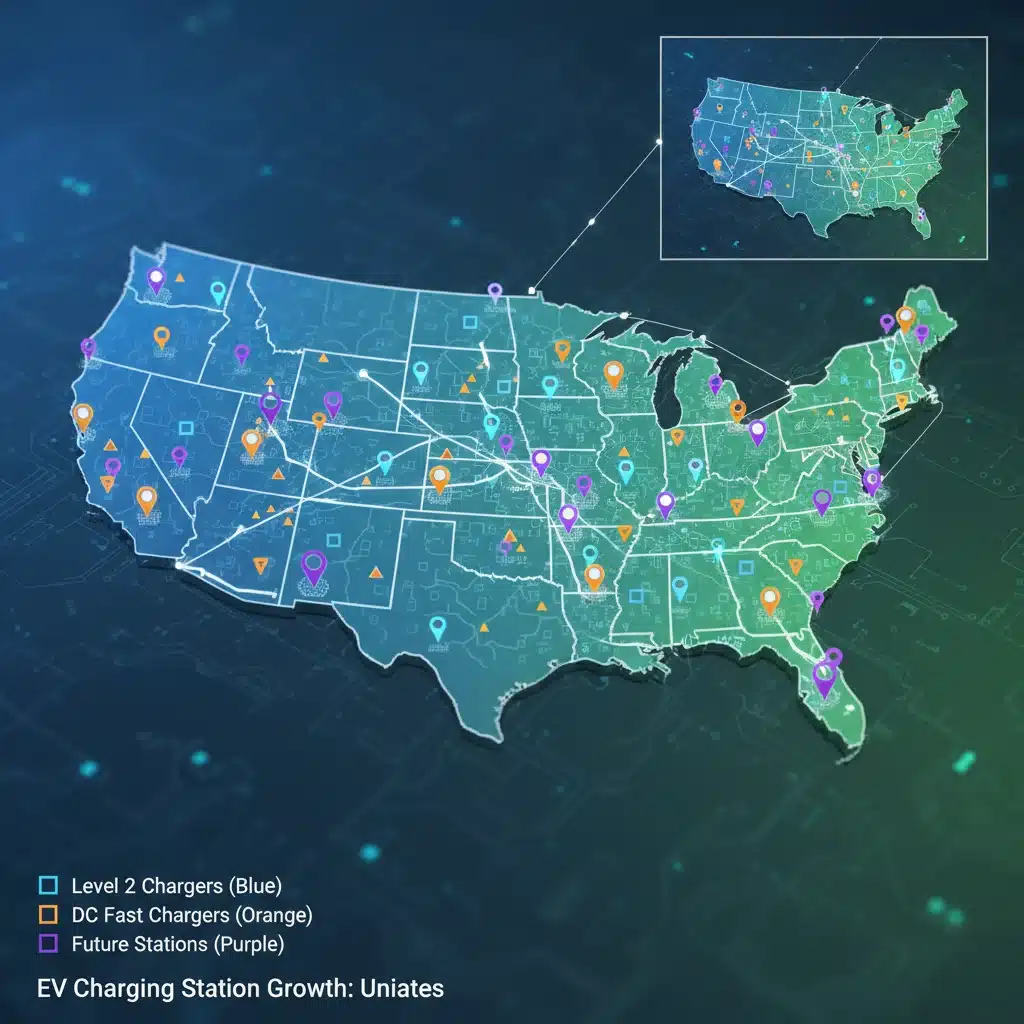
The Bipartisan Infrastructure Law (BIL) has allocated billions of dollars to build out a national network of 500,000 EV chargers by 2030, with a significant focus on DC Fast Chargers along major transportation corridors. By 2026, substantial progress is expected, leading to a more seamless travel experience for EV owners.
- National Electric Vehicle Infrastructure (NEVI) Formula Program: This program provides funds to states to build out EV charging infrastructure along designated alternative fuel corridors. The goal is to ensure charging stations are available every 50 miles along these corridors, no more than one mile off the roadway.
- Private Sector Investment: Alongside government initiatives, private companies like Electrify America, EVgo, ChargePoint, and Tesla’s Supercharger network continue to expand their footprints. Many new EVs from manufacturers like Ford, GM, and Rivian are also gaining access to Tesla’s extensive Supercharger network via adapters, significantly boosting charging options for non-Tesla EVs.
- Home Charging Solutions: The majority of EV charging still happens at home. Advances in smart charging technology allow owners to optimize charging times to take advantage of off-peak electricity rates, further reducing the cost of ownership. Many utility companies also offer incentives for installing Level 2 chargers at home.
The increased density and reliability of charging stations directly address one of the primary concerns of potential EV buyers: range anxiety. As the network matures, traveling long distances in an EV will become as convenient as fueling a gasoline car.
Key Trends Shaping the 2026 EV Market
Beyond incentives and infrastructure, several other trends are influencing the 2026 EV Market Guide and shaping consumer choices:
Diverse Vehicle Offerings
The variety of electric vehicles available in 2026 is unprecedented. From compact sedans and family SUVs to robust pickup trucks and commercial vans, nearly every vehicle segment now has compelling EV options. This diversity means buyers no longer have to compromise on vehicle type or utility when choosing an EV.
- Electrified Pickups: Trucks like the Ford F-150 Lightning, Chevrolet Silverado EV, and Ram 1500 REV are gaining significant traction, offering impressive towing capabilities and innovative features like bidirectional charging.
- Performance EVs: Luxury and performance brands are increasingly offering high-performance electric models that rival or surpass their gasoline counterparts in acceleration and handling.
- Affordable EVs: While still a growing segment, more manufacturers are introducing EVs with lower price points, aiming to make electric mobility accessible to a broader demographic, especially when combined with federal tax credits.
Battery Technology Advancements
Battery technology continues to evolve rapidly. In 2026, we can expect to see:
- Increased Range: Average EV ranges are consistently growing, with many new models offering well over 300 miles on a single charge, alleviating range anxiety.
- Faster Charging Speeds: Improvements in battery chemistry and charging technology mean quicker charging times, especially for DC Fast Chargers.
- Improved Durability and Longevity: Manufacturers are offering longer battery warranties, reflecting increased confidence in battery lifespan and performance.
- Solid-State Batteries: While still largely in development, some breakthroughs in solid-state battery technology might begin to influence commercial production by the late 2020s, promising even greater energy density and safety.
Vehicle-to-Grid (V2G) and Bidirectional Charging
A significant trend for 2026 is the growing adoption of bidirectional charging capabilities. This technology allows EVs to not only draw power from the grid but also send power back to it, or to power a home (Vehicle-to-Home, V2H). This can turn an EV into a mobile power bank, providing backup power during outages or enabling owners to sell electricity back to the grid during peak demand, potentially generating income. Several new EV models are expected to feature V2G or V2H capabilities as standard or optional features.
Sustainability and Ethical Sourcing
As EV production scales, there’s an increasing focus on the sustainability and ethical sourcing of raw materials for batteries. Consumers are becoming more aware of the environmental and social impacts of mining critical minerals like lithium, cobalt, and nickel. Manufacturers are responding by investing in responsible sourcing initiatives, recycling programs, and exploring alternative battery chemistries that reduce reliance on these materials.
Making an Informed Decision: Your 2026 EV Buyer’s Checklist
With so many factors to consider, here’s a checklist to guide your EV purchase in 2026:
- Verify Tax Credit Eligibility: Before you even start looking at cars, check the current IRS guidelines for both new and used EV tax credits. Confirm your income eligibility and cross-reference the vehicle you’re interested in with the latest list of qualifying models and their final assembly locations. Remember to check battery component sourcing rules for the full credit.
- Assess Your Driving Needs: Consider your daily commute, typical travel distances, and whether you frequently embark on long road trips. This will help you determine the ideal range and charging speed you need.
- Evaluate Home Charging Options: Most EV owners charge at home. Can your electrical panel support a Level 2 charger? Are there any local utility incentives for installation? If not, Level 1 charging might suffice, but it’s important to understand the charging times.
- Research Public Charging Availability: Use apps like PlugShare or the vehicle’s navigation system to scout charging stations along your common routes and destinations. Understand the types of chargers available (Level 2 vs. DCFC) and their reliability.
- Compare Total Cost of Ownership (TCO): Beyond the purchase price and tax credits, consider electricity costs, maintenance (EVs typically have lower maintenance needs), insurance, and potential state or local incentives.
- Test Drive Multiple Models: EVs offer a unique driving experience. Test drive several models to find one that fits your comfort, performance expectations, and technological preferences.
- Understand Warranty and Battery Health: Pay attention to the battery warranty, which is often separate from the general vehicle warranty. Most manufacturers offer extensive warranties on battery packs.
- Consider Leasing vs. Buying: Leasing an EV can sometimes offer different financial benefits, especially if the manufacturer passes on federal credits directly in the lease payment, even if the vehicle itself doesn’t meet all the stringent tax credit requirements for a direct purchase.
- Stay Updated: The EV market is dynamic. Keep an eye on news from the IRS, Department of Energy, and automotive manufacturers for any changes in incentives or new vehicle releases.
Conclusion: The Future is Electric, and 2026 is Your Year
The 2026 EV Market Guide reveals a landscape ripe with opportunity for consumers ready to embrace electric mobility. With robust federal tax credits potentially offering up to $7,500 in savings, a rapidly expanding and increasingly reliable charging infrastructure, and an ever-growing selection of diverse and technologically advanced vehicles, there has never been a better time to consider an electric vehicle.
By carefully navigating the eligibility requirements for incentives, understanding the nuances of charging, and staying informed about market trends, you can confidently make a choice that benefits your wallet, your lifestyle, and the environment. The journey towards a sustainable transportation future is well underway, and 2026 marks a significant milestone in making that future accessible to everyone. Get ready to plug in and drive into a cleaner, more efficient tomorrow.